Should You Hire a Public Adjuster for Hail Damage in Dallas?

After a hailstorm, Dallas homeowners hear from roofers, neighbors, their insurance company, and sometimes a public adjuster. It's fair to wonder whether you actually need a public adjuster for hail damage, or whether you can handle the claim yourself. The honest answer: it depends on the size of the claim, how it's going, and how much time and expertise you can bring.
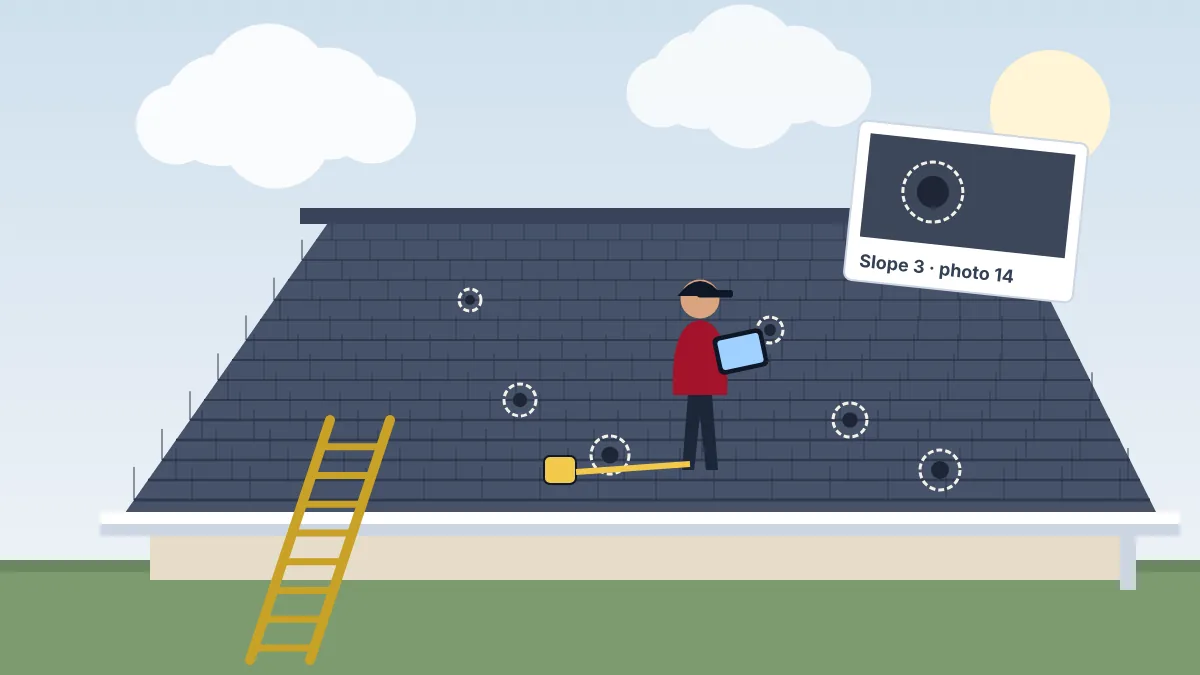
Public adjuster inspecting a Dallas roof with a tablet, ladder, and chalk-marked hail hits
Every slope is photographed, measured, and marked before an estimate is written.

This guide explains what a public adjuster for hail damage does, how fees work under Texas law, how a public adjuster differs from a roofer or attorney, and the situations where hiring one makes the most — and least — sense.

What a Public Adjuster Does on a Hail Claim

A public adjuster is a licensed professional who represents the policyholder, not the insurance company, on a property claim. On a hail claim, that typically includes:

  • Reviewing your policy, deductible, and any roof or cosmetic endorsements
  • Inspecting the roof slope by slope, plus gutters, siding, screens, fences, AC units, and interior
  • Researching the date of loss and hail size for your address
  • Preparing a detailed line-item estimate in industry-standard software
  • Presenting the claim to the carrier and meeting its adjuster
  • Negotiating the scope and price, submitting supplements, and tracking deadlines
  • Advising on appraisal when there's a dispute over the amount

Texas requires every public adjuster to hold a TDI license and to sign clients to a written contract.

What a Public Adjuster for Hail Damage Costs in Texas

Public adjusters in Texas typically work on contingency: their fee is a percentage of the claim payment. Texas Insurance Code §4102.104 caps the fee at 10% of the amount of the insurance settlement. There's usually no upfront cost, and if the carrier pays nothing, you owe nothing.

A few points to understand:

  • The fee percentage must be stated in the written contract you sign.
  • Ask whether the fee applies to amounts already paid before you hired the adjuster. Many reputable adjusters don't charge on amounts paid before they were involved.
  • Texas law gives you a short window to cancel a public adjuster contract after signing; the contract will explain it.
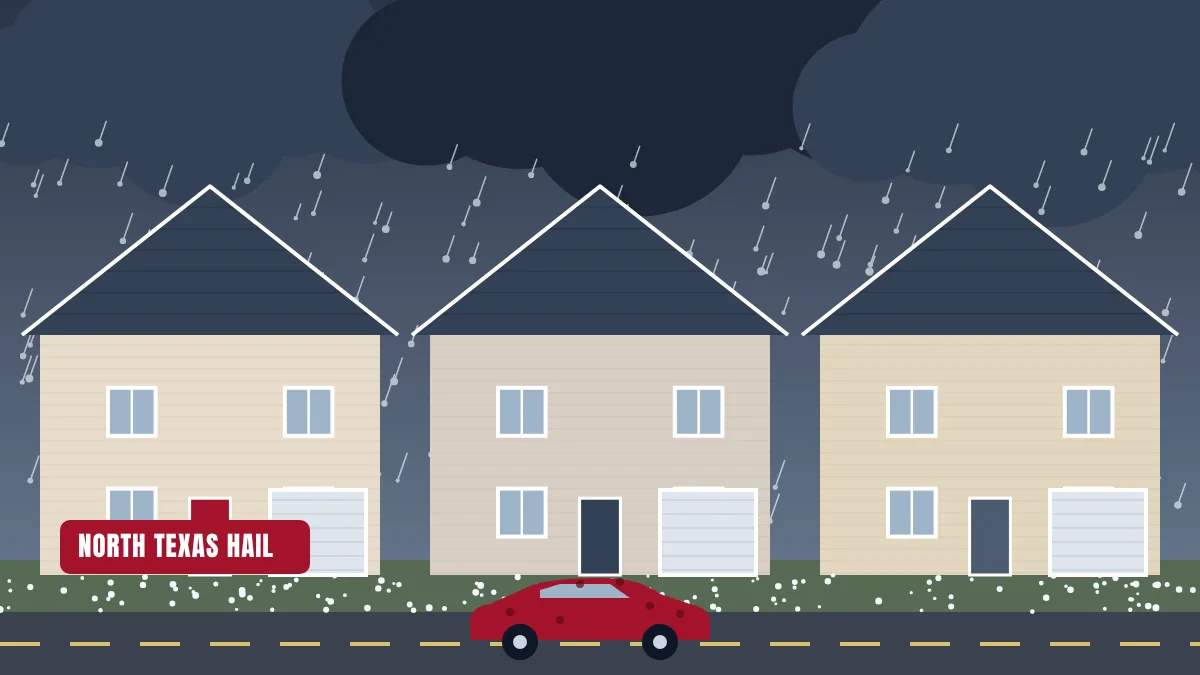
Hail falling on two-story homes and a dented car on a Dallas street
Spring hail can hit an entire street at once, roofs, garage doors, screens, and cars alike.

Public Adjuster vs. Roofer vs. Attorney

RoleWho they representWhat they can do
Public adjusterYou, the policyholderEvaluate, document, and negotiate your insurance claim
Roofer / contractorThemselves (as your contractor)Inspect, estimate, and perform repairs; cannot negotiate your claim with the insurer under Texas law
Insurance company adjusterThe insurance companyInvestigate and evaluate the claim on the carrier's behalf
AttorneyYouGive legal advice, send pre-suit notice, and file suit for bad faith or breach of contract

Texas also prohibits a public adjuster from acting as the contractor on a claim they adjusted, which keeps those roles separate.

8

years adjusting claims

463

appraisals closed in 2025

15

Dallas-area neighborhoods and suburbs

$0

upfront to get started

When Hiring a Public Adjuster for Hail Damage Makes Sense

  • The damage is significant. Full roof replacement plus exterior items, or interior water damage.
  • The estimate seems low. Missing slopes, items, code requirements, or overhead and profit.
  • The carrier approved only repairs on a roof that you or your roofer believe can't be repaired.
  • The claim was denied for wear and tear, prior damage, or no storm damage, and you disagree.
  • Your policy is complex — ACV roof schedule, cosmetic exclusion, high percentage deductible.
  • You don't have time. Claims take hours of calls, emails, inspections, and paperwork.
  • Multiple perils are involved — hail plus wind plus interior water.

When You Probably Don't Need One

A public adjuster isn't necessary on every claim. You may not need one if:

  • The damage is small and only modestly exceeds your deductible
  • The carrier's estimate closely matches your contractor's bid and covers all damaged items
  • The claim is straightforward and moving quickly
  • You're comfortable reading estimates and negotiating

A good public adjuster will tell you honestly when a claim doesn't need outside help. If someone pushes you to sign on a claim that's barely over the deductible, that's a warning sign.

How to Choose a Dallas Public Adjuster

  1. Verify the license on the Texas Department of Insurance website.
  2. Ask about experience with hail claims and with your carrier.
  3. Ask about background. Prior claims adjusting work, construction experience, and appraisal experience all help.
  4. Read the contract — fee percentage, what it applies to, and cancellation terms.
  5. Avoid guarantees. Texas advertising rules prohibit promising results; anyone promising a specific dollar amount or percentage increase is a red flag.
  6. Check local knowledge. Someone who knows Dallas permits, neighborhoods, and storm history will build a stronger file.
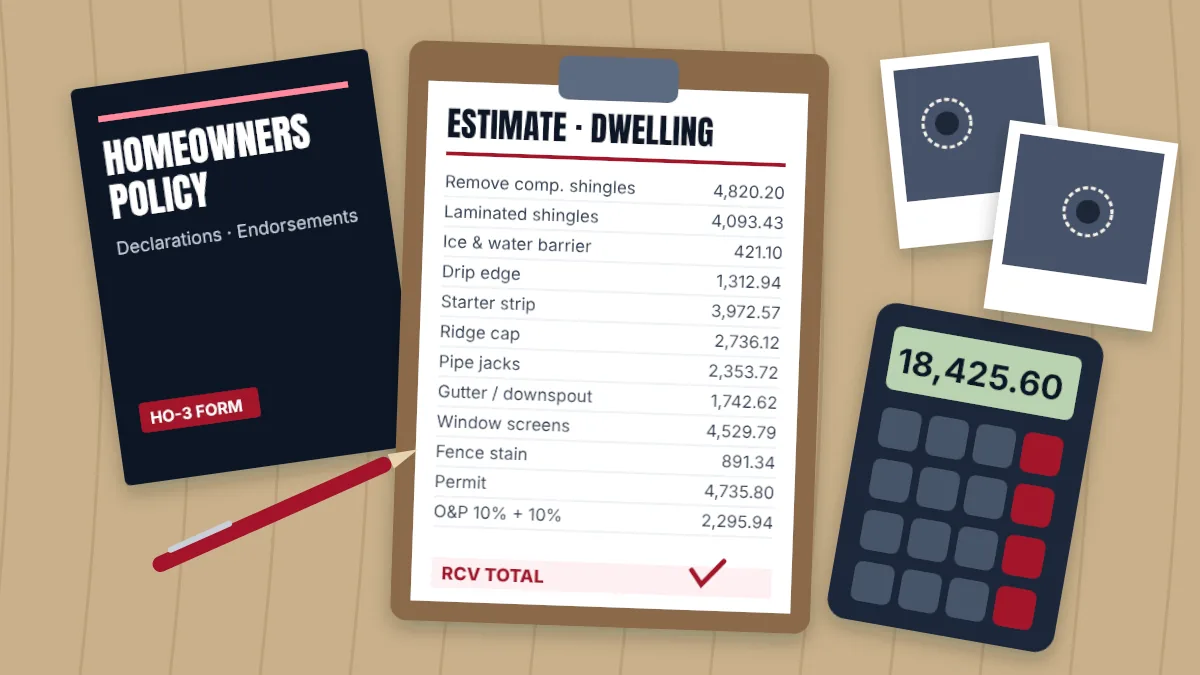
Line-item insurance claim estimate, homeowners policy, and calculator for a Dallas claim
A line-item estimate priced the way local contractors actually bill the work.

A Realistic Look at the Numbers

Because the fee is a percentage, it's worth thinking through whether the value a public adjuster adds is likely to exceed what you pay. Consider a composite example. A Plano homeowner's carrier estimate after a hailstorm covers two roof slopes and gutters for $7,500 before the deductible. A public adjuster's inspection documents damage on all slopes, finds that the shingles are discontinued and brittle, and adds screens, a garage door panel, fence staining, drip edge, and steep charges. The revised claim is presented with photos and measurements.

Whether the carrier accepts the revised scope depends on the evidence and the policy — there's no guarantee. But when the documented, covered loss is substantially larger than the original estimate, the fee is paid out of a larger recovery. When the original estimate was already complete and accurate, there's little for a public adjuster to add, and you likely don't need one. That's the honest calculus.

Red Flags When Someone Offers to Handle Your Hail Claim

  • No Texas public adjuster license number on their materials or contract
  • Promises of a specific payout or a percentage increase
  • Pressure to sign immediately at your door after a storm
  • A roofer who says they'll 'handle the insurance' and negotiate for you
  • An offer to cover or waive your deductible
  • A fee above the 10% Texas cap, or fees on money already paid before they were hired without clear disclosure

What to Expect After You Hire One

Once you sign, the public adjuster notifies the carrier in writing that they represent you. From then on, most communication runs through them. Expect an inspection, a detailed estimate within a couple of weeks, and regular updates. You still choose your own roofer and remain in control of decisions like accepting a settlement or invoking appraisal. Payment checks are generally issued to you (and your mortgage company if applicable), and the adjuster's fee is paid from those proceeds.

Frequently asked questions

What will a public adjuster charge me in Texas?

Public adjuster fees in Texas are a percentage of the claim payment and are capped by law at 10% (Texas Insurance Code §4102.104).

Can I hire a public adjuster after my claim is filed?

Yes. You can hire one at any stage, including after a low estimate or denial, as long as the policy deadlines haven't passed.

Will a public adjuster get me more money?

No adjuster can promise a specific result. A public adjuster's job is to document the full covered loss and negotiate for it. Results depend on the policy and the facts.

Does hiring a public adjuster slow down my claim?

Usually not. A public adjuster can often speed things up by submitting complete documentation and tracking the carrier's Chapter 542 deadlines. Complex or disputed claims take longer regardless of who handles them.

Can I cancel a public adjuster contract in Texas?

Texas law gives you a short window after signing to cancel without penalty, and the contract must explain how. Read that section before you sign, and ask questions about anything unclear.